|

Letter #01 - 2006
Sub:
Fischer-Spassky game 5
Date:
1/01/2006 7:16:49 PM MST
From: sebacrispo
To:
service@chess-poster.com
Hello.
Excuse me, but my level is not good enough to understand why Spassky resigned on game five against Fischer.
What is the definitive advantage for Fischer?
Thank you.
Dear
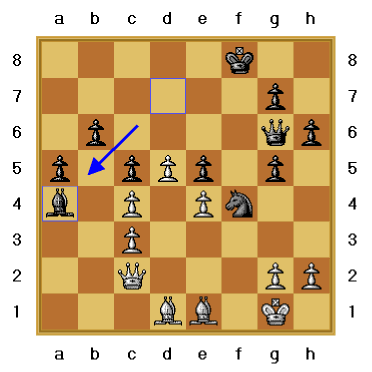
viewer, Before Fischer's last move (27. ... Bxa4) the game was quite even in position and pieces for both players. When Spassky moved his Queen (27. Qc2), Fischer visualized that taking the white a4 Pawn with his Bishop would define the game on his favor.
In order to understand this advantage you need to analyze the possible variants available to Spassky after Fischer's last move:
Robert Fischer
Boris Spassky
1. If Spassky takes the Bishop with his Queen, Fischer's Queen may take the white e4 Pawn. This powerful move
threatens mate at g2 (Qxg2#) or taking the white Bishop at e1 with the same consequences.
2. On the other side, any move the white Queen makes other than taking the a4 Bishop, Fischer will exchange his Bishop for white's d1 Bishop and forcing Spassky's Queen to capture the black Bishop. This again, allows Fischer to take the white e4 Pawn and no matter what Spassky does, Fischer still has a potential mate, superior position or a c4 Pawn capture to follow.
The above scenarios leave Spassky with a very weak situation in position and pieces with a vulnerable
and exposed King, a bad Bishop with limited mobility, and a Queen committed to protect his King.
As you may know, most professional Chess players resign when they feel their position is hopeless. They do it quite often long before the game should end rather than being checkmated.
Next, try yourself the game like if you were playing as Boris Spassky (white) in the move when he resigned and see if you are able to beat the computer:


Thank you for
visiting us,
chess-poster.com |



